
A UNESCO World Heritage badlands landscape a few hours from Calgary, and one of Alberta's most unique camping destinations.
Dinosaur Provincial Park isn't like most Alberta camping trips.
There are no mountains here, and no alpine lakes.
Instead, there are hoodoos, coulees, and one of the richest dinosaur fossil beds on Earth.
If your idea of a great weekend involves badlands scenery, dry prairie air, and a landscape that looks almost otherworldly, Dinosaur Provincial Park deserves a spot on your list.
Not to Be Confused with Drumheller
Dinosaur Provincial Park is its own destination, located well southeast of Drumheller's badlands. If you're planning a trip, don't assume the two are next door to each other—they're roughly two and a half hours apart by road.
Where Is Dinosaur Provincial Park?
Dinosaur Provincial Park sits about 48 km northeast of Brooks, Alberta, and roughly 18 km from the tiny village of Patricia.
From Calgary, expect a drive of around two to two and a half hours, mostly along the Trans-Canada Highway before heading north on secondary roads.
From Edmonton, it's a longer haul—roughly five hours—so this one is better suited to a long weekend than a quick overnight escape.
The final approach road is a two-lane paved secondary highway that doesn't always show up clearly on GPS apps, so it's worth having a general sense of the route before you go.
A Landscape Unlike Anywhere Else in Alberta
The park sits in the Red Deer River valley, where thousands of years of erosion from meltwater, wind, and rain have carved out hoodoos, coulees, and exposed sedimentary layers.
It's classic Alberta badlands—dry, dramatic, and completely different from anything you'll find in the Rockies or the northern forests.
The terrain is still actively eroding today, which is part of what makes the park such an important fossil site. Layers of rock are constantly being exposed by the elements.
Why It's a UNESCO World Heritage Site
Dinosaur Provincial Park was designated a UNESCO World Heritage Site in 1979, recognized for both its badlands scenery and its exceptional fossil record from the Late Cretaceous period.
The park contains one of the greatest concentrations of dinosaur fossils found anywhere in the world, dating back roughly 75 million years to when the region was a subtropical coastal plain.
More than 150 complete dinosaur skeletons and hundreds of high-quality specimens, representing over 50 species, have been recovered here and now sit in museums around the globe—most notably the Royal Tyrrell Museum of Palaeontology.
Camping in the Park
Dinosaur Campground sits in the river valley, shaded by cottonwood trees along the Red Deer River, with some sites backing onto a small creek.
The campground offers both unserviced and powered sites, along with flush toilets, hot showers, laundry, a playground, picnic tables, fire pits, and a sani-dump station. A small on-site concession sells basic supplies and firewood seasonally.
Reservations are strongly recommended, especially through the busier months from May to October. Rates and booking windows change from year to year, so it's worth checking the current Alberta Parks reservation site before you go.
The campground itself has good tree cover, but keep in mind that most of the surrounding badlands terrain is open and exposed—shade is limited once you're out on the trails.
Things to Do
A large portion of the park is a protected natural preserve, only accessible through guided tours—this is what protects the fossil beds from disturbance. The public loop area, however, has plenty to explore on your own:
- Badlands Trail, a short self-guided loop through classic hoodoo terrain
- Cottonwood Flats Trail, following the river through shaded cottonwoods
- Coulee Viewpoint Trail, for wide views over the valley
- Trail of the Fossil Hunters, ending at a historic quarry site
- The 3.5 km Public Loop Road, open to drive, walk, or bike
From late spring through fall, Alberta Parks also runs guided Fossil Safari tours into the restricted natural preserve, along with guided hikes and interpretive programs—these are worth booking ahead if you want to see fossils up close.
The visitor centre has exhibits covering the park's geology and paleontology, and is a good first stop to get oriented.
Best Time to Visit
Guided tours and interpretive programs generally run from May through October, with the widest schedule in July and August.
Many visitors find late spring and early fall more comfortable, since summer daytime temperatures in this part of Alberta can climb into the mid-30s Celsius. This is a dry, exposed badlands environment, closer to a desert climate than anything else in the province.
If it rains before your visit, be cautious on the trails—the clay-based surfaces get extremely slippery when wet, and Alberta Parks recommends waiting at least half a day after rain before hiking.
Camping with a Rooftop Tent
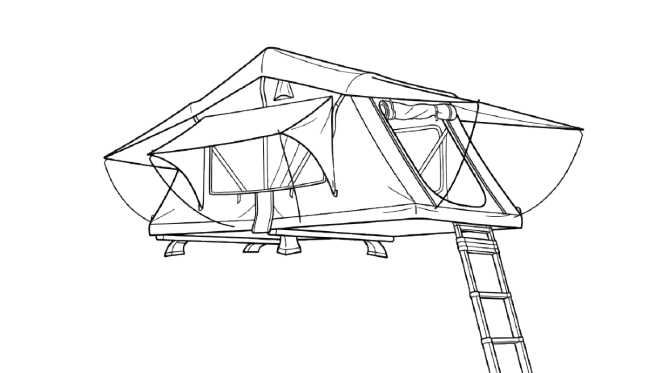
A rooftop tent works well here. The campground has enough tree cover for comfortable overnight temperatures, and the badlands terrain means you're not dealing with uneven, rocky tent pads the way you might elsewhere.
Because the surrounding landscape is so exposed, bring sun protection for setup and takedown—there isn't much shade once you're away from the river valley.
What to Pack
This is a different kind of packing list than a mountain camping trip. I'd recommend bringing:
- Sturdy closed-toe hiking shoes (not sandals)
- Sun hat and SPF 30+ sunscreen
- At least a litre of water per person for day hikes
- Light, breathable layers for hot afternoons
- A warmer layer for cooler evenings
- Bear spray isn't necessary here, but general wildlife awareness is—see the safety notes below
If you're new to camping altogether, our Camping Checklist for Beginners covers the essentials for any trip.
Safety Notes
The park is home to the prairie rattlesnake, Alberta's only venomous snake. Bites are rarely serious, but it's best to stay on trails, watch where you step around rocks, and give any snake you see plenty of room—they're not aggressive and prefer to retreat.
Black widow spiders and scorpions are also present in the area. Don't approach or handle anything you're not sure about.
Alberta Parks maintains fire restrictions across the provincial park system, and collecting or cutting deadfall in the park isn't permitted—firewood can be purchased on-site seasonally. Always check current fire ban status before your trip.
Nearby Attractions
Brooks
The closest city, with grocery stores, restaurants, and fuel—useful for restocking supplies before or after your stay.
Royal Tyrrell Museum
About two and a half hours away in Drumheller, this museum holds the largest collection of fossils excavated from Dinosaur Provincial Park. If you have the time, pairing the two makes for a great extended trip.
Kinbrook Island and Tillebrook Provincial Parks
Both within about 45 minutes of Dinosaur Provincial Park, these make good backup options if the campground here is fully booked, or worthwhile add-ons if you want a lake day nearby.
Who Will Enjoy Dinosaur Provincial Park?
This park is a great fit for:
- Anyone curious about paleontology or Alberta's fossil history
- Photographers drawn to badlands and hoodoo landscapes
- Campers looking for something different from the usual mountain or lake trip
- Families interested in guided fossil programs
- Road trippers combining it with Drumheller and the Royal Tyrrell Museum
Final Thoughts
Dinosaur Provincial Park isn't a typical Alberta camping destination, and that's exactly what makes it worth the drive.
Between the badlands scenery, the fossil history, and a landscape that looks nothing like the rest of the province, it's a trip that stands apart from the usual mountain and lake getaways.
If you're planning a longer road trip through southern Alberta, this is one of those places worth building the whole itinerary around.